Bathrooms
Handheld Showers and Anti-Scald Valves: Bathroom Safety Upgrades That Matter
Scalds send thousands of older adults to the emergency room every year, and most happen in the shower or tub. Two upgrades address most of the risk.
Written by Sarah Jenkins
Reviewed by Elena Marsh
Updated August 27, 2026
Fact-checked August 27, 2026
3 min read
Editorial policyScroll the table sideways to see all columns.
Why scalds are the hidden bathroom injury
Falls get the attention, but water above 120°F can scald skin in minutes — and above 130°F, in about 30 seconds. Older skin is thinner and burns faster, and slower reaction times mean a person may not move out of a sudden hot-water surge quickly. Reaction time, reduced sensation from conditions like diabetes, and slower movement compound the risk.
Many water heaters ship set to 140°F. The classic scald scenario: someone flushes a toilet or starts a washing machine, cold water pressure drops, and the shower water spikes hot. A mixing valve exists to make that spike impossible.
The two valve types
Scroll the table sideways to see all columns.
Choosing a handheld showerhead
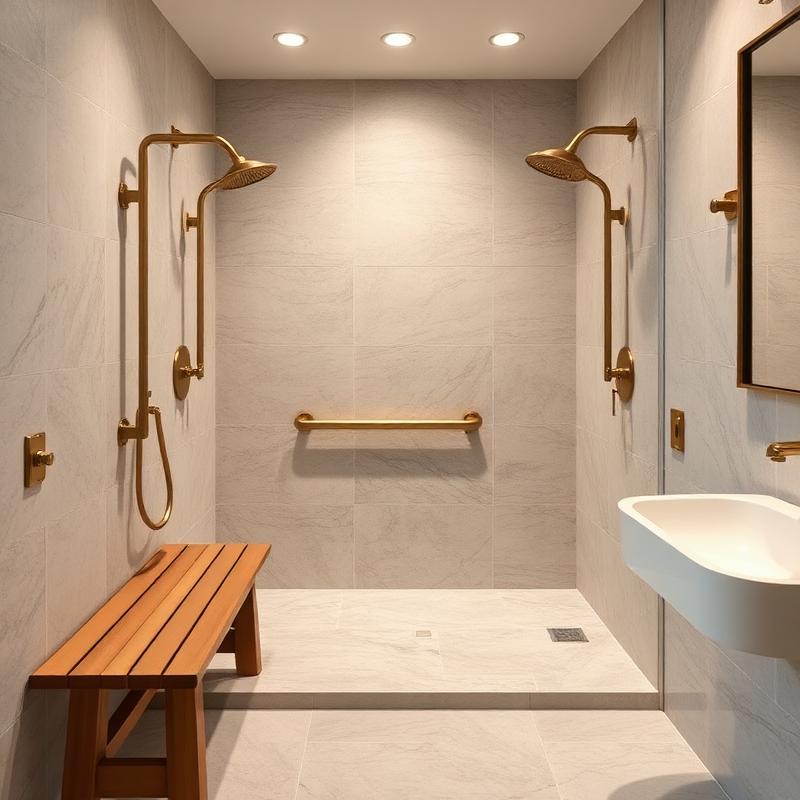
- Slide bar, not just a bracket: the head must move up and down so it works from standing, from a shower chair, and from a bench.
- Hose length of 59-84 inches: enough to reach a seated bather without pulling the bar off the wall.
- Lever or paddle control on the head: easier than a rotating dial for arthritic hands.
- Pause/trickle button on the handle: lets the user stop water flow while soaping without losing the temperature setting.
- Weight matters: large rain-style heads are heavy when full of water; a lighter head is easier to direct one-handed.
- The slide bar is not a grab bar. Install a real grab bar next to it — many people grab the slide bar instinctively when unsteady, and it will pull out of the wall.
The full safety stack, in order of value
- Set the water heater to 120°F — free, five minutes.
- Add a handheld showerhead on a slide bar — under $150, usually DIY.
- Add a shower chair or bench so bathing is seated — see our shower chairs and transfer benches guide.
- Install real grab bars, anchored to blocking or studs.
- Upgrade to a thermostatic mixing valve when the shower valve is next serviced or the wall is open for any other reason.
The valve work requires opening the wall or an access panel, so it pairs naturally with a remodel. If a plumber is already changing the valve during a tub-to-shower conversion, the thermostatic upgrade adds little to the labor.
Frequently asked questions
What temperature should a water heater be set to?
120°F is the widely recommended setting. It is hot enough for washing and dishwashers with boosters, and it takes several minutes of exposure to scald — versus about 30 seconds at 130°F and roughly 5 seconds at 140°F.
Is a pressure-balance valve good enough?
It prevents the classic toilet-flush scald and is far better than nothing. A thermostatic valve is the better choice because it controls actual temperature, not just pressure ratio — it protects even when the water heater output drifts.
Can I install a handheld showerhead myself?
Yes. Most screw onto the existing shower arm with thread tape, and slide bar kits mount with anchors. The one caution: mount the bar into a stud or use rated hollow-wall anchors, and never treat it as a grab bar.
Do anti-scald devices exist for sinks and tubs too?
Yes. Point-of-use thermostatic mixing valves can be installed under sinks and at tub spouts, and anti-scald tub spouts exist. They are worth adding anywhere a person with reduced sensation bathes or washes unsupervised.
Keep reading
Sources
- Scald prevention and burn safety — U.S. Consumer Product Safety Commission
- Home safety recommendations for older adults — Centers for Disease Control and Prevention
Sarah Jenkins
Editor, Bathrooms & Remodeling
Sarah writes about accessible bathrooms, remodeling budgets, and the difference between a $6,000 shower and a $22,000 one. She reviews product specifications against real installation constraints and has toured more than fifty accessible remodels in progress.
Covers: Accessible bathrooms · Walk-in tubs · Remodel budgeting · Universal design
Make Your Home Safer and Easier to Live In
Practical home-accessibility advice, product comparisons, and cost guides delivered to your inbox.
No spam, no pop-ups. Unsubscribe any time.