Cost guide
Walk-In Tub Cost Guide
The tub is often less than half the invoice. Plumbing, electrical, and the water heater decide the rest.
Written by Sarah Jenkins
Reviewed by Elena Marsh
Updated August 16, 2026
Fact-checked August 16, 2026
2 min read
Editorial policy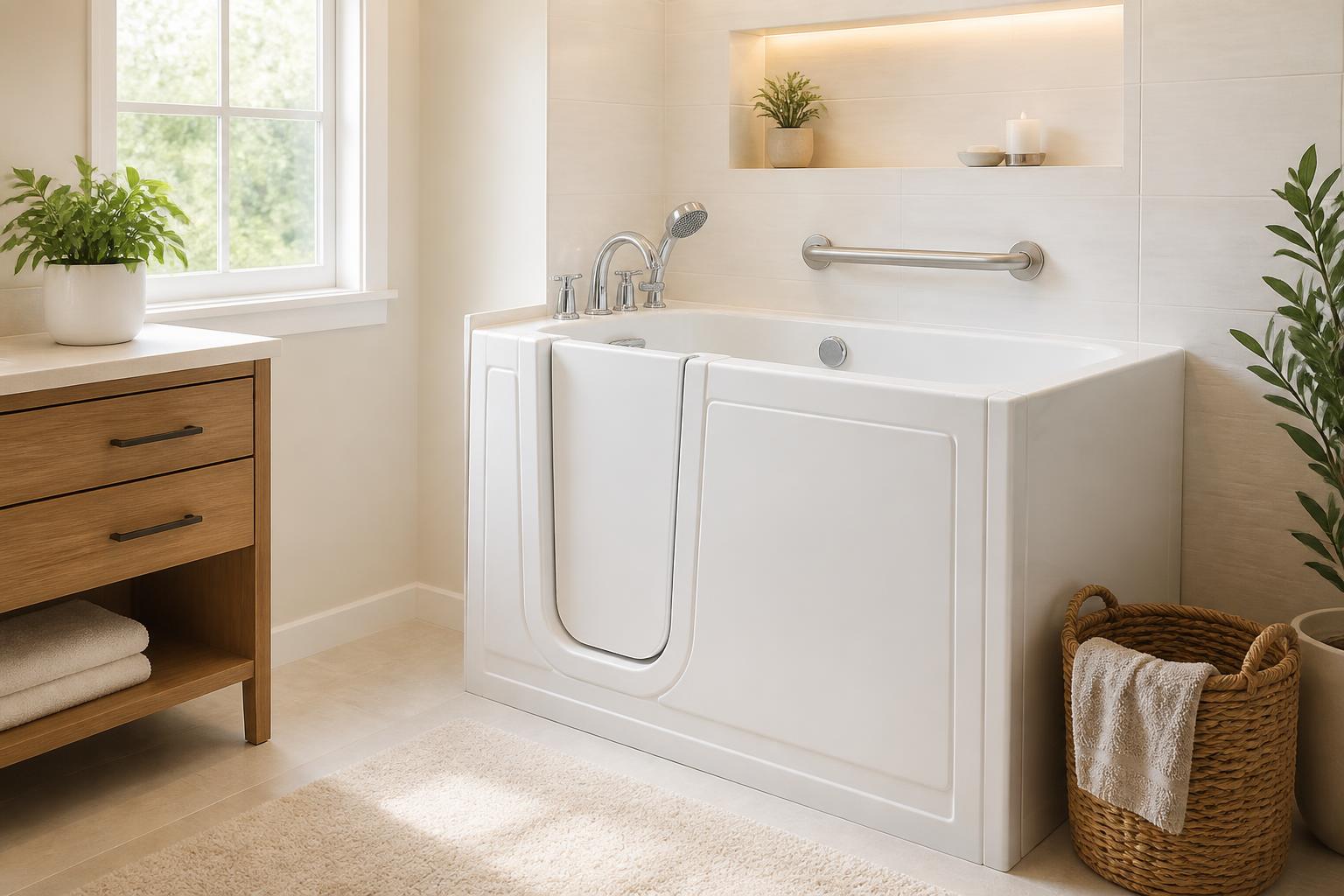
A walk-in tub costs $4,500 to $22,000 installed, and the range is wide for a reason: the tub itself is usually $2,000 to $9,000, and everything around it — demolition, plumbing, a dedicated electrical circuit, tile, and often a larger water heater — accounts for the rest.
Soaker tub, no jets
Equipment only
$2,000 – $5,000
Hydrotherapy or air-jet tub
Equipment only
$5,000 – $9,000
Removal and demolition
More if tile is damaged
$500 – $1,500
Plumbing modifications
Drain relocation is the usual driver
$800 – $3,000
Dedicated electrical circuit
Required for jets and heaters
$400 – $1,200
Larger water heater
Often needed for fill volume
$1,200 – $3,000
The specification that matters most: fill and drain time
You sit inside a walk-in tub while it fills and while it drains, because the door cannot open until the water is out. A tub with a fast-fill valve and dual drains empties in about 80 seconds; a basic model can take three minutes or more. On a cold morning that difference is the whole experience.
Upgrades worth paying for — and skipping
Pros
- Fast-fill valve and dual drain
- In-line heater to keep water warm during a long soak
- Anti-scald thermostatic valve
- Textured floor plus properly anchored grab bars
- A door that swings inward if the bathroom is tight
Cons
- Chromotherapy lighting
- Bluetooth audio packages
- Ozone sterilization claims
- Aromatherapy dispensers
- Extended jet packages if soaking is the actual goal
Walk-in tub or accessible shower?
For most households, a curbless roll-in shower is the more practical accessibility improvement: it is easier for a caregiver to assist with, it is faster to use daily, and it works for people who cannot step over even a low threshold. A walk-in tub wins when bathing itself is the priority — for pain relief or for a person who genuinely wants to soak.
Frequently asked questions
Does Medicare pay for a walk-in tub?
Original Medicare does not cover walk-in tubs, which it treats as a home modification. Some Medicare Advantage plans, Medicaid waivers, and VA programs offer partial help depending on the state and the person's eligibility.
How long does a walk-in tub take to install?
A straightforward replacement is usually one to two days. Projects requiring drain relocation, electrical work, or retiling commonly take three to five days.
Do walk-in tubs increase home value?
Generally no, and they can narrow the buyer pool. Treat one as a purchase for the current occupants, not an investment.
Keep reading
Sources
- Real Prices Paid submissions, 2025–2026 — Home Access Advisor
- Manufacturer specification sheets, six walk-in tub lines — Manufacturer materials
Sarah Jenkins
Editor, Bathrooms & Remodeling
Sarah writes about accessible bathrooms, remodeling budgets, and the difference between a $6,000 shower and a $22,000 one. She reviews product specifications against real installation constraints and has toured more than fifty accessible remodels in progress.
Covers: Accessible bathrooms · Walk-in tubs · Remodel budgeting · Universal design
Make Your Home Safer and Easier to Live In
Practical home-accessibility advice, product comparisons, and cost guides delivered to your inbox.
No spam, no pop-ups. Unsubscribe any time.