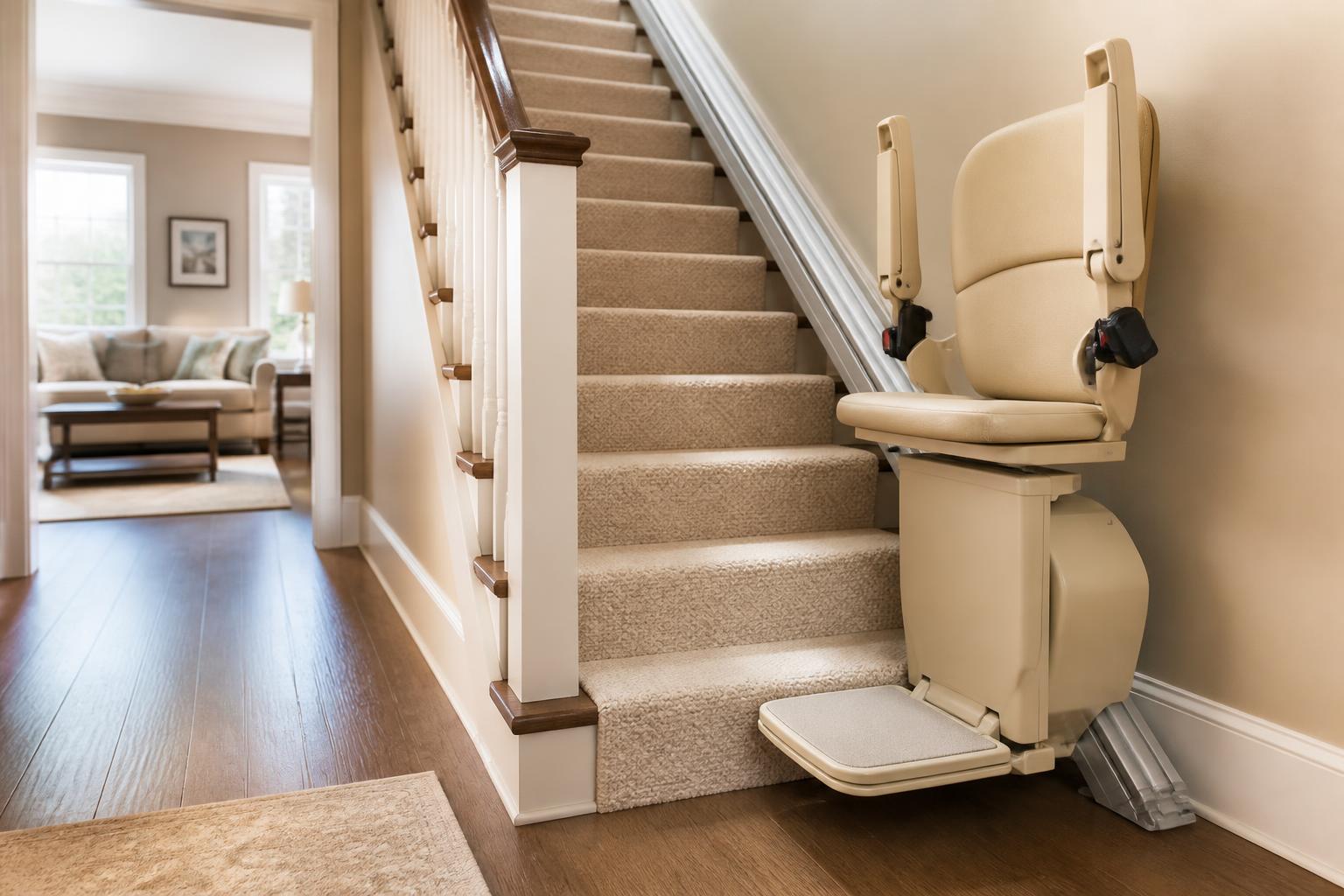
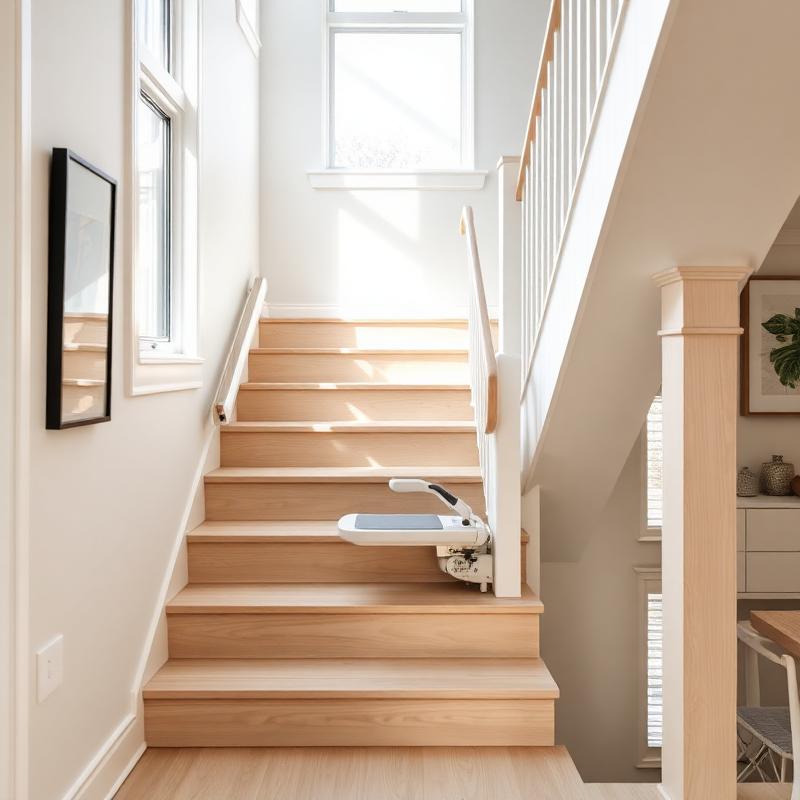
Stair Lifts
Stair Lift Weight Capacity and Bariatric Stair Lifts: What to Know
Weight capacity is the number that decides whether a given stair lift is safe for the person riding it. Here is what the rating means, what it leaves out, and when you need a bariatric model.
Written by Marcus Thorne
Reviewed by Elena Marsh
Updated August 27, 2026
Fact-checked August 27, 2026
3 min read
Editorial policyScroll the table sideways to see all columns.
What the weight rating actually covers
The stated capacity is the maximum user weight the manufacturer certifies the complete lift to carry safely. It accounts for the rider, not for items they carry or for a second person leaning on the chair. It is not a seat-only rating — the rail brackets, the drive gear, and the motor all share that load, which is why a higher-capacity lift usually needs a stronger rail and more frequent bracket spacing.
When you need a bariatric stair lift
A bariatric model is the right call when the rider's weight exceeds roughly 350–375 pounds, or when a standard lift would be running near its limit every trip. Running any machine continuously at its rated maximum puts more wear on the motor and battery, shortens component life, and leaves no margin for weight fluctuation. Stepping up to a higher-capacity model buys headroom and durability, not just a higher number on the spec sheet.
What changes with a bariatric model
- Wider, reinforced seat with a higher weight-rated seat belt and armrests.
- A heavier rail with brackets spaced more closely together — sometimes every other tread rather than every third.
- A stronger motor, which draws more current and may shorten battery run time between charges.
- Shorter maximum rail length on some models, because the heavier rail is harder to support over long spans — relevant for very long straight staircases.
- On curved lifts, bariatric options are more limited and more expensive, because the custom rail has to carry the extra load through turns.
Weight capacity and stair width
A wider bariatric seat needs more room. On a narrow staircase, a wider seat can block the walkway when folded, leaving little room for others to pass. Measure the clear stair width (wall to handrail, or to any protrusion) and compare it to the folded width the manufacturer lists. Roughly 28–30 inches of clear tread is a common minimum for a standard lift; bariatric models may need more.
Cost picture
A standard straight stair lift runs roughly $3,000–$6,000 installed. Heavy-duty straight lifts typically add $500–$1,500. Bariatric straight lifts commonly land around $5,000–$8,000. Bariatric curved lifts are the most expensive combination and can exceed $15,000 because the custom rail must be engineered for the higher load.
Scroll the table sideways to see all columns.
Does Medicare or insurance cover a bariatric stair lift?
Medicare does not cover stair lifts for the home — they are classified as home modifications, not durable medical equipment, regardless of capacity. Some state Medicaid waivers and VA grants can help. See the funding guides below for the realistic sources.
What happens if you exceed the weight rating?
Overloading risks motor burnout, accelerated gear and rail wear, battery drain, and in the worst case a stall or a mechanical failure mid-staircase. It also voids the warranty and any safety certification. The rating is a hard limit, not a target.
Can a standard lift be 'upgraded' to bariatric?
No. The rail, brackets, motor, and seat are matched to the rating at the factory. Swapping a seat does not raise the assembly's certified capacity. A higher-capacity lift is a different product, not an accessory.
Do bariatric stair lifts fold up smaller?
They fold, but the wider seat and heavier rail mean the folded footprint is larger than a standard lift's. If stair width is tight, a bariatric model may not fit at all — in that case a platform lift or a home elevator is often the better path.
Keep reading
Sources
- Stair lifts and home safety — National Institute on Aging
- Home modifications and aging in place — Administration for Community Living
Marcus Thorne
Senior Editor, Mobility Equipment
Marcus covers stair lifts, home elevators, and platform lifts for Home Access Advisor. He spent eleven years estimating residential remodels before moving into consumer publishing, and he reads dealer quotes for a living — which is why most of his guides start with the line items other sites leave out.
Covers: Stair lifts · Residential elevators · Installation pricing · Dealer quotes
Make Your Home Safer and Easier to Live In
Practical home-accessibility advice, product comparisons, and cost guides delivered to your inbox.
No spam, no pop-ups. Unsubscribe any time.