Cost guide
How Much Does a Stair Lift Cost?
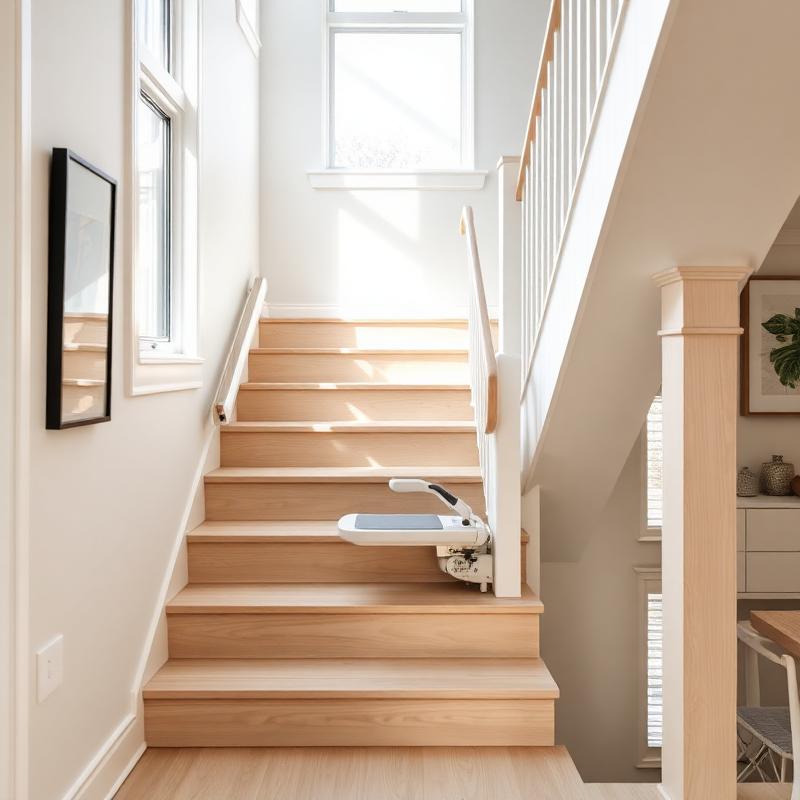
Straight rails are close to a catalog product. Curved rails are custom manufacturing. Here is what separates a fair quote from an inflated one.
Written by Marcus Thorne
Reviewed by Elena Marsh
Updated August 11, 2026
Fact-checked August 4, 2026
3 min read
Editorial policy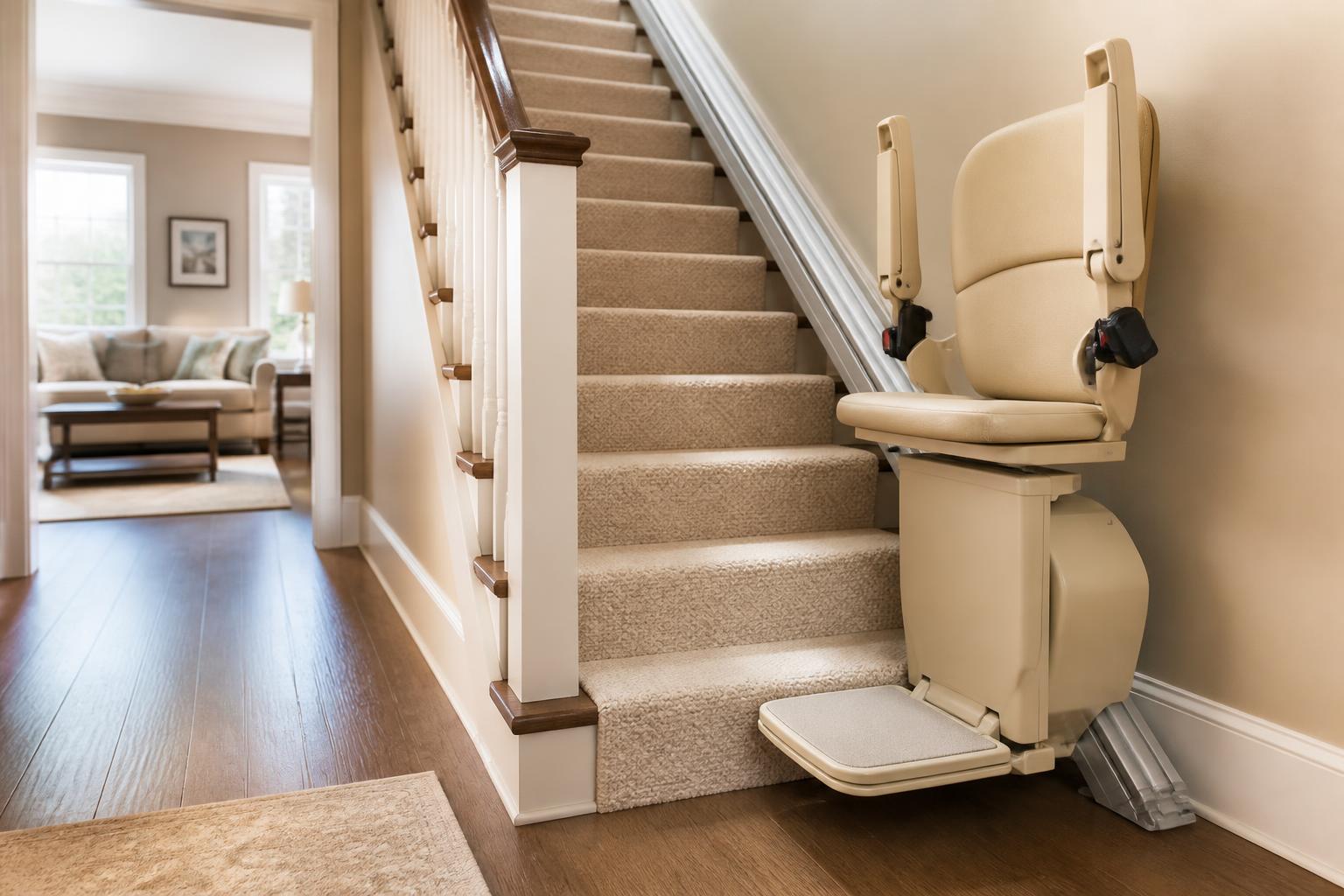
We may earn a commission if you purchase through links on this page. This does not affect our recommendations.
Most homeowners are quoted between $2,800 and $6,000 for a straight stair lift, installed. Curved staircases are a different product category: because the rail is manufactured to match your exact staircase, quotes usually land between $9,000 and $16,000, and complex multi-landing stairs can go higher.
The number on your quote is driven by four things, in this order: whether the rail is straight or curved, the length of the rail, the powered options you add, and the dealer's local labor rate. Brand matters less than most buyers expect.
Straight rail, standard seat
12–16 steps, no landings
$2,800 – $4,200
Straight rail, powered options
Powered folding rail and swivel seat
$4,000 – $6,000
Outdoor straight rail
Weatherproofing and a cover add cost
$4,000 – $7,500
Curved rail, single turn
Custom fabrication, 4–8 week lead time
$9,000 – $13,000
Curved rail, multiple landings
Longer rail, more bends
$12,000 – $16,000+
Reconditioned straight rail
Availability varies by dealer
$1,800 – $3,000
What is actually included in the price
A stair lift quote is not just equipment. On a typical straight install, roughly 70–80% of the total is the lift and rail, 15–20% is labor, and the remainder is the service plan or extended warranty if you buy one. Ask any dealer to break the quote into those three lines. A dealer who will not separate them is the dealer to be careful with.
- The lift, seat, and rail cut to your staircase length
- Installation labor, usually three to five hours on a straight rail
- A basic warranty — coverage length varies enormously by brand
- Removal and haul-away of an old lift, if there is one
The add-ons that change your total
Three options account for most of the spread between a $3,200 quote and a $5,800 one on the same staircase.
Ranges reflect quotes submitted to Home Access Advisor and published dealer option sheets.
Scroll the table sideways to see all columns.
Straight vs curved: why the gap is so large
A straight rail is cut from stock extrusion to your staircase length. A curved rail is measured with a laser or photo survey, then bent and welded in a factory specifically for your stairs. That fabrication is the cost. It also means a curved lift has almost no resale value — the rail fits one staircase in the world.
If your staircase has a single 90-degree turn at the bottom with a landing, ask about a straight rail that stops at the landing plus a second straight rail above it. Two straight lifts sometimes cost less than one curved rail, at the cost of a transfer at the landing.
What homeowners actually paid
Our Real Prices Paid database collects invoice totals from homeowners. Recent straight-rail submissions cluster tightly around $3,400 to $4,000 installed. Curved submissions range far wider, from $8,900 to $14,800, with rail length explaining most of the difference.
How to compare quotes without getting talked in circles
- Get three quotes, and insist all three price the same options.
- Ask for the equipment price and labor price separately.
- Ask what the service plan costs in years two through five, not just year one.
- Ask who answers a service call — the dealer, or a subcontractor two states away.
- Ask what happens to the rail and the stairs when the lift is removed.
Frequently asked questions
Does Medicare pay for a stair lift?
Original Medicare does not cover stair lifts, because they are considered home modifications rather than durable medical equipment. Some Medicare Advantage plans offer limited home-modification benefits, and some state Medicaid waiver programs and VA programs do help. We cover each path in our guide to who pays for stair lifts.
How much does a curved stair lift cost compared with a straight one?
Curved lifts typically cost two to four times more. A straight rail is usually $2,800 to $6,000 installed while a curved rail is usually $9,000 to $16,000, because the rail is custom-fabricated for one specific staircase.
Can I install a stair lift myself?
Some straight-rail kits are sold for self-installation, but most manufacturers void the warranty and many dealers will not service a self-installed lift. Given that the lift carries a person over a hard fall, professional installation is the safer choice.
Is renting a stair lift cheaper?
Rental usually runs $250 to $500 for the first month including installation, then $50 to $150 per month. That is cheaper than buying if the need is under roughly eighteen months, and more expensive after that.
Keep reading
Sources
- Real Prices Paid submissions, 2025–2026 — Home Access Advisor
- Published dealer option sheets, four national brands — Manufacturer materials
- Durable medical equipment coverage rules — Medicare.gov
Marcus Thorne
Senior Editor, Mobility Equipment
Marcus covers stair lifts, home elevators, and platform lifts for Home Access Advisor. He spent eleven years estimating residential remodels before moving into consumer publishing, and he reads dealer quotes for a living — which is why most of his guides start with the line items other sites leave out.
Covers: Stair lifts · Residential elevators · Installation pricing · Dealer quotes
Make Your Home Safer and Easier to Live In
Practical home-accessibility advice, product comparisons, and cost guides delivered to your inbox.
No spam, no pop-ups. Unsubscribe any time.