Stair Lifts
Stair Lift Installation: What Actually Happens
Most of a straight stair lift install is done in an afternoon. Curved rails are the long pole.
Written by Marcus Thorne
Reviewed by Elena Marsh
Updated August 26, 2026
Fact-checked August 26, 2026
3 min read
Editorial policyScroll the table sideways to see all columns.
The rail attaches to your stairs, not your wall
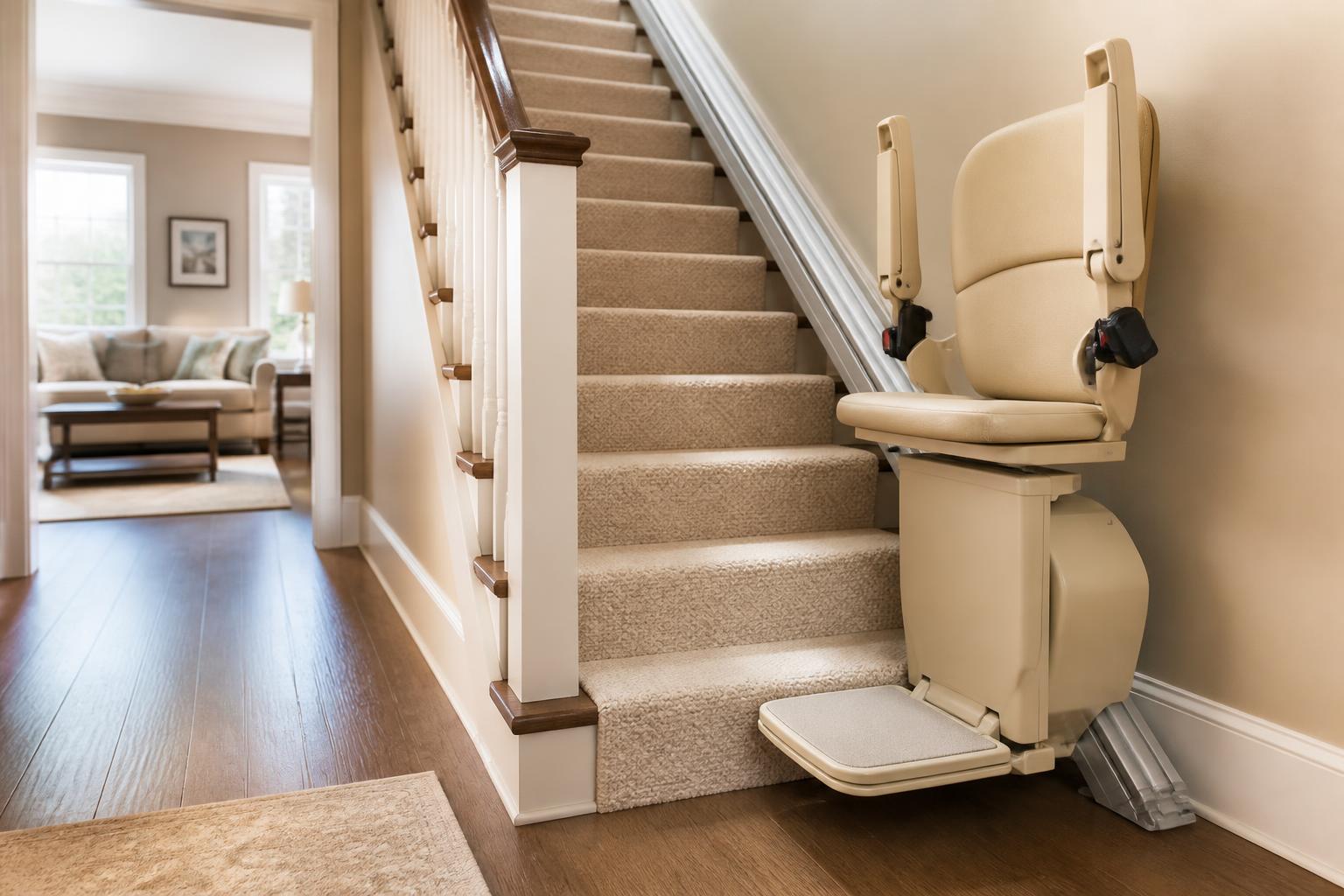
This surprises most people. Installers bolt brackets into the stair treads or stringer, so the wall beside the staircase is untouched. That is also why a stair lift can be removed later with only small holes in the treads to patch.
What happens before installation day
- An in-home assessment: the installer measures stair width, rise, run, landings, doorways, and where a seat can safely park at the top and bottom.
- A written quote covering the lift, the rail, installation, and any options such as a powered swivel seat or folding rail.
- Rail fabrication. Straight rails are stock lengths cut to fit. Curved rails are built to the shape of your specific staircase.
- Scheduling. Curved installs are usually booked once the rail arrives from the factory.
How to prepare your staircase
- Clear the stairs and about three feet of floor space at the top and bottom landings.
- Move fragile items from the walls along the staircase; installers carry long rail sections.
- Confirm there is a working outlet within reach of the charge point, usually at the top or bottom of the run.
- Decide which side the lift sits on and walk that choice with the installer before drilling starts.
- Plan a route for anyone who cannot use the stairs during the install window.
Power and electrical work
Most residential stair lifts run on batteries that recharge from a standard household outlet, so a dedicated circuit is rarely required. If there is no outlet near the stairs, adding one is usually a small electrician visit rather than a panel upgrade. Ask whether the quote includes that work or leaves it to you.
The handover matters more than people expect
Before the installer leaves, have the person who will actually use the lift ride it in both directions, unaided, twice. Check that they can reach the controls, operate the swivel latch, fold the footrest, and use the call remotes at both landings. Adjustments to seat height and armrests are far easier to make while the technician is still there.
- Ask for a demonstration of the manual lowering procedure in case of a power failure.
- Confirm where the battery isolation switch is.
- Get the model and serial number in writing for future service calls.
- Ask what the first-year service visit includes and what it costs afterward.
Renting or a temporary need
If the need may be short term, installation is still the same physical process, but the contract differs. Our guide to stair lift rental versus buying walks through when a rental is the cheaper answer.
Frequently asked questions
Does a stair lift damage the staircase?
Brackets bolt into the treads, leaving small holes that can be filled when the lift is removed. Carpet is usually not cut. We cover this in more detail in our guide on whether stair lifts damage stairs.
Can I install a stair lift myself?
Some straight kits are sold for self-installation, but a poorly aligned rail is both a fall risk and a warranty problem. Most manufacturers require professional installation to keep the warranty valid.
How long does a curved stair lift take to arrive?
The rail is custom manufactured for your staircase, and lead times commonly run several weeks. Ask any dealer for their current lead time in writing before you sign.
Keep reading
Marcus Thorne
Senior Editor, Mobility Equipment
Marcus covers stair lifts, home elevators, and platform lifts for Home Access Advisor. He spent eleven years estimating residential remodels before moving into consumer publishing, and he reads dealer quotes for a living — which is why most of his guides start with the line items other sites leave out.
Covers: Stair lifts · Residential elevators · Installation pricing · Dealer quotes
Make Your Home Safer and Easier to Live In
Practical home-accessibility advice, product comparisons, and cost guides delivered to your inbox.
No spam, no pop-ups. Unsubscribe any time.