Stair Lifts
How Long Do Stair Lifts Last? Lifespan and When to Replace
A stair lift is a decade-plus investment when it's maintained — but the motor, battery, and controls age on different schedules. Here's how to read the signs.
Written by Sarah Jenkins
Reviewed by Elena Marsh
Updated August 27, 2026
Fact-checked August 27, 2026
3 min read
Editorial policyScroll the table sideways to see all columns.
The rail usually outlives the electronics
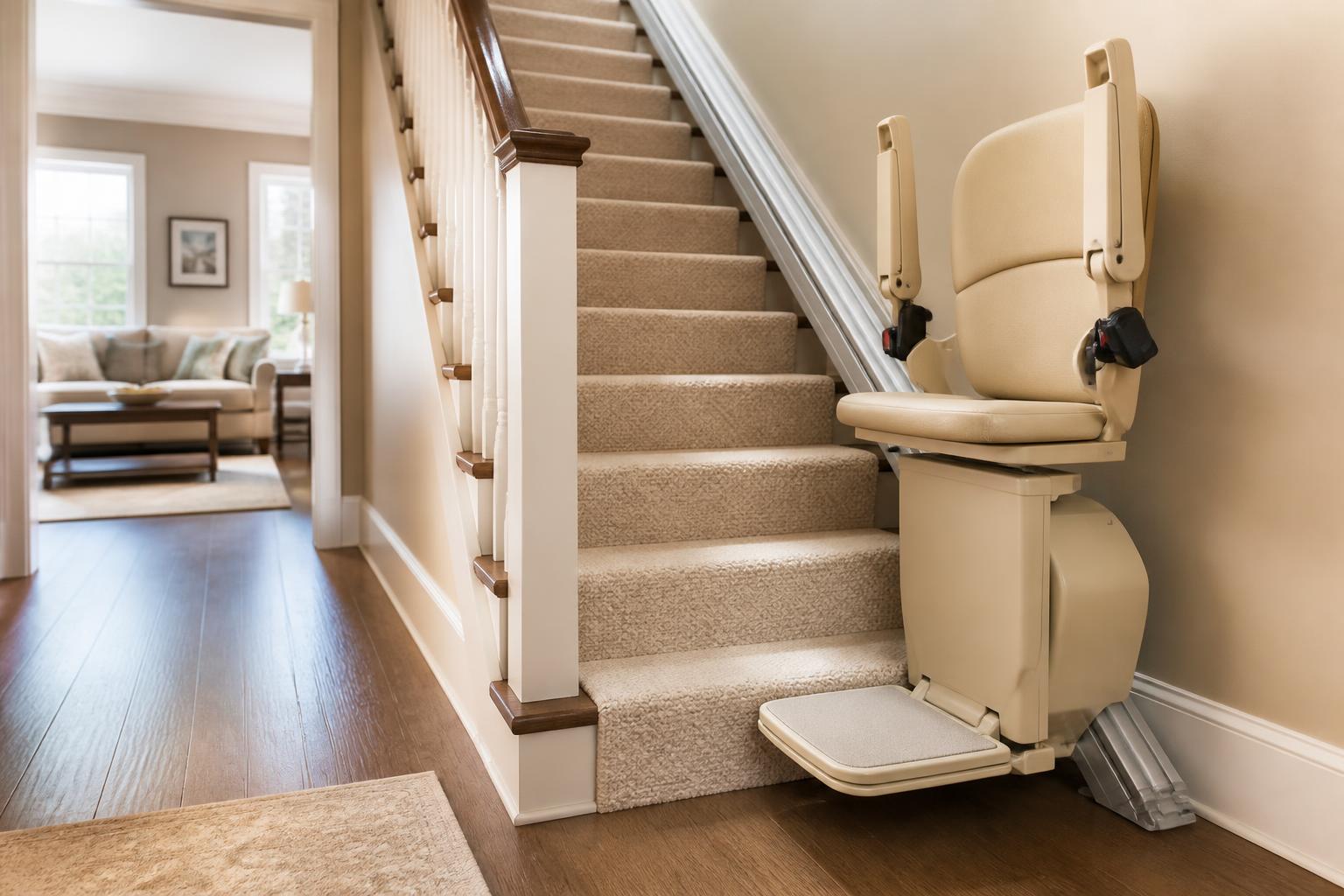
A stair lift is a rail with a moving carriage on it. The aluminum or steel rail is the most durable part and can last well beyond the electronics — which is why a straight rail is the reusable, resaleable part of a used lift, and a curved rail (custom to one staircase) is not. When a lift 'dies,' it's almost always the carriage, motor, battery, or controls — not the rail.
What wears out, and on what schedule
Scroll the table sideways to see all columns.
What shortens a stair lift's life
- Running near the weight limit constantly, which strains the motor and battery.
- Skipping annual service — small drifts in the rail, charge-point contact, and sensors become big failures.
- Outdoor exposure without a cover, which corrodes electronics and rails faster.
- Parking the carriage off the charge point, which deep-discharges and shortens the battery.
- Spills or debris on the rail that the carriage drags through the drive.
When to replace rather than repair
Repair is usually right for a single failed part on a lift under 8–10 years old. Replacement starts to make sense when:
- A major component (motor or control board) fails and the part is discontinued or costs near a new unit.
- The lift is out of warranty and service calls are stacking up faster than one per year.
- The rider's needs have changed — weight, transfer ability, or stair configuration — and the current lift no longer fits.
- The manufacturer has left the market and parts are scarce.
- A repair estimate reaches roughly a third to half the cost of a new installed lift.
Resale and reuse
A straight rail is the reusable part — straight lifts can be removed, re-cut to fit a new staircase, and reinstalled, which is the basis of the used-straight-lift market. Curved rails are custom to one staircase and almost never transfer. If you expect to move, a straight lift retains some resale value; a curved one does not.
How long is the warranty?
Warranties vary by manufacturer and component. Motors and rails often carry longer terms (several years to lifetime on some brands), while batteries and wearable parts are shorter. Confirm the exact term by component before buying, because 'lifetime warranty' usually applies to the rail, not the electronics.
Can a 20-year-old stair lift be serviced?
Sometimes, if the manufacturer still supports the model and parts exist. Often, a lift that old is past parts availability, and a dealer will recommend replacement over repeated repairs. Annual service records make this decision far easier — without them, a technician is guessing.
Does a stair lift need to be serviced every year?
Most manufacturers specify an annual service visit. In light-use homes, some stretch that to every 18–24 months, but skipping service entirely is the most common path to an early failure. Service is cheap relative to a motor replacement.
Keep reading
Sources
- Stair lifts and home safety — National Institute on Aging
- Assistive technology programs by state — Administration for Community Living
Sarah Jenkins
Editor, Bathrooms & Remodeling
Sarah writes about accessible bathrooms, remodeling budgets, and the difference between a $6,000 shower and a $22,000 one. She reviews product specifications against real installation constraints and has toured more than fifty accessible remodels in progress.
Covers: Accessible bathrooms · Walk-in tubs · Remodel budgeting · Universal design
Make Your Home Safer and Easier to Live In
Practical home-accessibility advice, product comparisons, and cost guides delivered to your inbox.
No spam, no pop-ups. Unsubscribe any time.