Stair Lifts
18 Questions to Ask Before You Buy a Stair Lift
Bring this list to the in-home estimate. It changes the conversation.
Written by Marcus Thorne
Reviewed by Elena Marsh
Updated August 26, 2026
Fact-checked August 26, 2026
2 min read
Editorial policyScroll the table sideways to see all columns.
About the quote
- Can you itemize the lift, the rail, installation labor, and each option separately?
- Is this price valid for a set number of days, and is there any deposit that is non-refundable?
- Does the quote include removing an existing lift, if there is one?
- Are permits, electrical work, or carpet work included or excluded?
- What would the same staircase cost with a reconditioned unit instead of new?
About the equipment
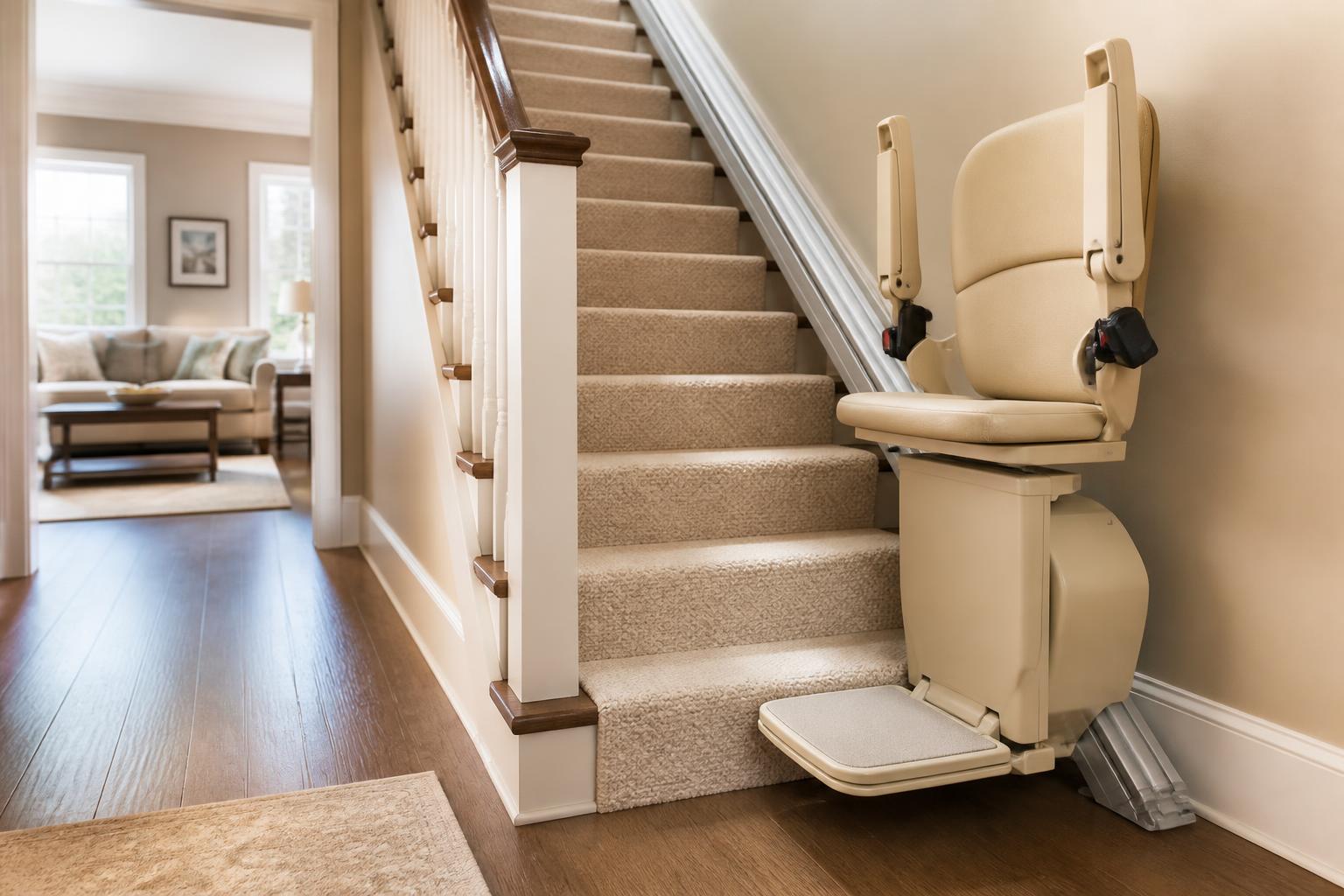
- Is this a straight or curved rail, and how long is the rail you are quoting?
- What is the rated weight capacity, and how much clearance is left on my stair width with the seat down?
- Does the seat swivel manually or with power at the top landing?
- Is a folding rail needed at the bottom to keep a doorway or hallway clear?
- Does the lift run on batteries so it still works during a power outage, and how is it charged?
About installation
- Are your installers employees or subcontractors?
- What is the lead time from signing to a working lift?
- How long will the stairs be unusable on install day?
- Will you walk the user through operating it, including the manual lowering procedure?
About what happens later
- What is covered, and for how long, on the motor, gearbox, rail, and batteries?
- What does a service call cost after the warranty period, including the trip charge?
- How quickly do you respond when a lift stops working, and do you stock parts locally?
- If we no longer need the lift, what do you charge to remove it, and do you buy it back?
- Is the warranty transferable if the house is sold?
Watch for pressure tactics
A price that is only good if you sign today is a reason to slow down, not speed up. Legitimate dealers will hold a quote long enough for a family to talk it over, and most states give consumers a cancellation window on in-home sales contracts. Read the cancellation terms before signing.
Frequently asked questions
How many stair lift quotes should I get?
Two or three is usually enough to see the range in your area, particularly for curved rails where fabrication cost varies widely.
Is a cheaper stair lift a bad idea?
Not necessarily, but check the warranty length and local parts availability. A low price with slow service can cost more over five years.
Keep reading
Marcus Thorne
Senior Editor, Mobility Equipment
Marcus covers stair lifts, home elevators, and platform lifts for Home Access Advisor. He spent eleven years estimating residential remodels before moving into consumer publishing, and he reads dealer quotes for a living — which is why most of his guides start with the line items other sites leave out.
Covers: Stair lifts · Residential elevators · Installation pricing · Dealer quotes
Make Your Home Safer and Easier to Live In
Practical home-accessibility advice, product comparisons, and cost guides delivered to your inbox.
No spam, no pop-ups. Unsubscribe any time.