Home Elevators
Do Home Elevators Add Value? What Resale Really Looks Like
An elevator rarely returns its full cost at resale, but in the right house it widens the buyer pool instead of narrowing it.
Written by Sarah Jenkins
Reviewed by Elena Marsh
Updated August 27, 2026
Fact-checked August 27, 2026
3 min read
Editorial policyScroll the table sideways to see all columns.
Why there is no single percentage
Remodeling return figures for kitchens and baths exist because those projects are common enough to measure. Home elevators are not. Return depends almost entirely on whether the buyer for your specific house wants one, and that varies by price tier and region far more than by anything you control.
Be skeptical of any source quoting a precise resale percentage for elevators. Appraisers generally treat an elevator as a functional feature with limited paired-sales data behind it, which means the value assigned is a judgment call informed by the local market.
Where elevators genuinely help a sale
- Homes above roughly the top quartile of the local price range, where buyers expect premium features.
- Elevated coastal construction, where the main living floor is one or two flights up.
- Three-story townhomes and urban infill, where stairs are the main daily complaint.
- Homes marketed to buyers planning to age in place, where the elevator is the reason they can.
Where it can work against you
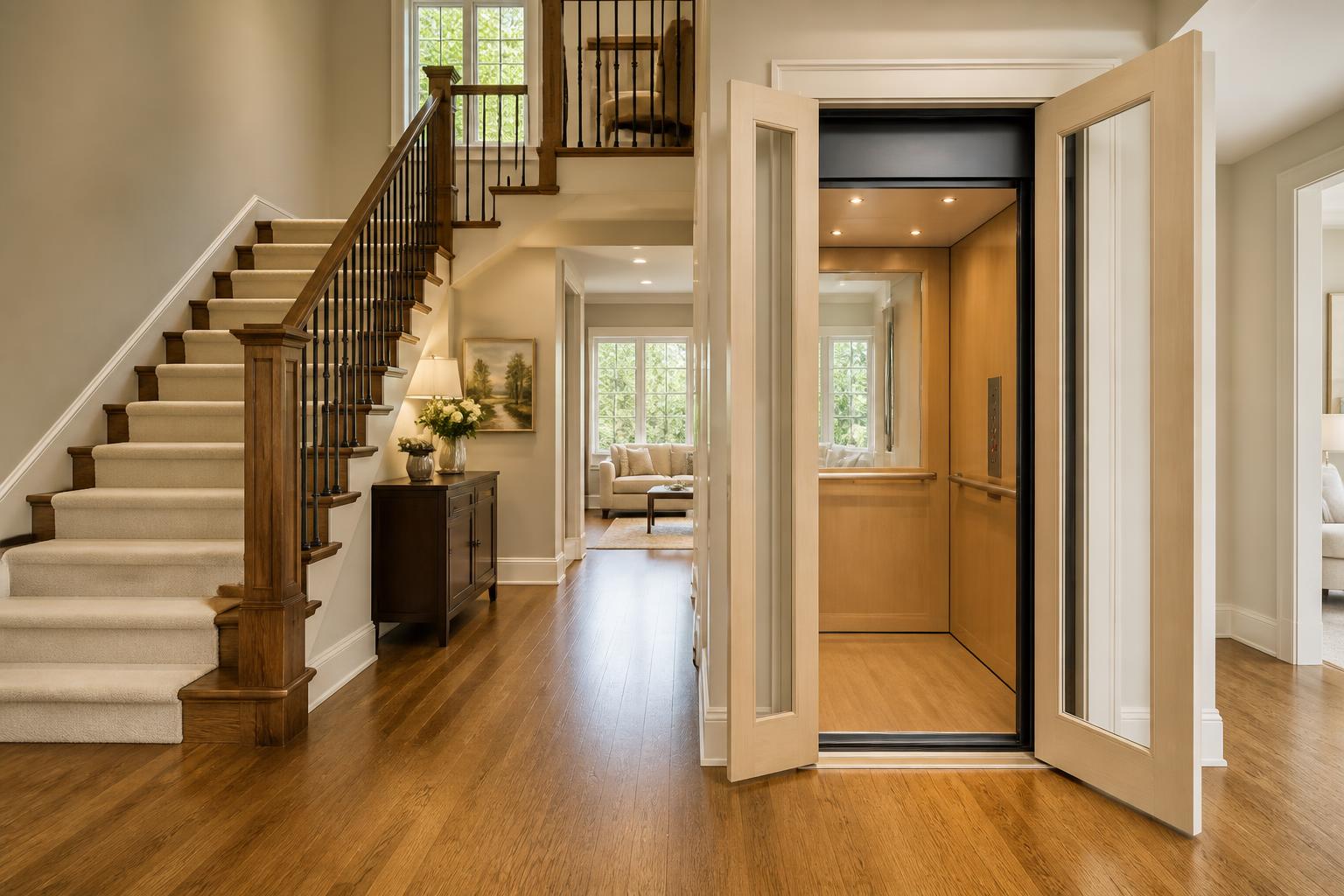
The problems are almost always execution problems, not the elevator itself. A retrofit that consumes the only linen closet on each floor, a cab finished in materials that clash with the rest of the house, or an installation without permits all make the feature harder to sell than it should be.
Pros
- Removes the main reason people leave a multi-story home.
- Moves laundry, groceries, and luggage without stairs.
- Expected at higher price tiers and in elevated coastal homes.
- Documented permits and service records reassure inspectors and buyers.
Cons
- Rarely returns its full installed cost in a mid-market home.
- Consumes floor area on every level it serves.
- Adds an ongoing maintenance obligation a buyer inherits.
- A dated or non-working unit reads as deferred maintenance.
The honest way to run the numbers
Compare the elevator against the alternative you would otherwise choose, not against nothing. If the realistic alternative is selling and moving, the elevator competes with moving costs, agent commissions, a new mortgage, and leaving a neighborhood — a comparison it often wins even at zero resale return.
Home elevator installed
Plus maintenance
$35,000–$85,000
Selling and moving costs
Commissions, closing, moving
8–10% of home value
Assisted living, per year
Recurring, rises annually
$55,000–$75,000
Stair lift (if stairs are the only barrier)
No wheelchair capability
$3,000–$16,000
These ranges are researched market figures, not appraisals, and local costs vary widely.
Protecting the value you do create
- Pull every permit and keep the acceptance test paperwork with the house records.
- Choose a location that borrows the least useful space — stacked closets, an oversized landing, an attached exterior addition.
- Finish the cab and the doors to match the house, not the catalog default.
- Keep a maintenance log and a service contract that a buyer can assume.
- Confirm parts availability for the model you buy; orphaned equipment is what makes an elevator a liability.
Frequently asked questions
Does a home elevator increase appraised value?
Sometimes, but appraisers have little paired-sales data for residential elevators, so the adjustment is a local judgment. It is more reliable in luxury and elevated coastal homes than in mid-market housing.
Will an elevator make my house harder to sell?
A well-finished, permitted, well-maintained elevator generally does not. A retrofit that removed usable storage, was installed without permits, or no longer runs is what turns buyers away.
Is it cheaper to build elevator-ready and add it later?
Usually yes in new construction. Framing stacked closets as a future hoistway is a small cost at build time and avoids cutting floors later, though the elevator equipment itself still costs the same when you add it.
Do buyers worry about maintenance?
Some do. Handing over a service history and an active maintenance agreement addresses most of the concern, the same way it does for a pool or HVAC system.
Keep reading
Sources
- Cost of Care Survey (long-term care costs) — Genworth
- Remodeling and resale value research — National Association of Home Builders
Sarah Jenkins
Editor, Bathrooms & Remodeling
Sarah writes about accessible bathrooms, remodeling budgets, and the difference between a $6,000 shower and a $22,000 one. She reviews product specifications against real installation constraints and has toured more than fifty accessible remodels in progress.
Covers: Accessible bathrooms · Walk-in tubs · Remodel budgeting · Universal design
Make Your Home Safer and Easier to Live In
Practical home-accessibility advice, product comparisons, and cost guides delivered to your inbox.
No spam, no pop-ups. Unsubscribe any time.